In brief
- PET is a mono-material thermoplastic that can be melted and reprocessed; bottles and jars are among the packaging items most processed in mechanical recycling.
- For rPET intended for food contact, clean flakes alone are not enough; a decontamination process and regulatory compliance are required.
- The choice of colour, label, cap and adhesive determines how valuable the packaging will be in recycling.
Polyethylene terephthalate (PET) is used in many types of packaging, from water and beverage bottles to wide-mouth food jars. Besides being light, transparent and shatterproof, PET has another distinguishing property: as a thermoplastic that can be melted and reshaped, it is suitable for recycling. In this article we summarise the recycling process of PET, the conditions for using recycled PET (rPET) in food packaging and the points to consider in packaging design.
Why does PET stand out in recycling?
PET packaging is mostly produced from a single polymer and is marked with code 1 in the international resin identification system. Mono-material packaging is easier to sort than mixed-material packaging. In addition, the PET bottle stream is one of the waste streams with the most widespread separate collection and sorting infrastructure. Clear, colourless PET is the most sought-after quality on the secondary raw material market, because it can be reused in different colours and applications.
Mechanical recycling step by step
Today, most PET recycling is carried out mechanically. In broad terms, the process consists of the following steps:
- Collection and sorting: Used packaging is collected; optical (NIR) sorters separate the material by polymer type and colour.
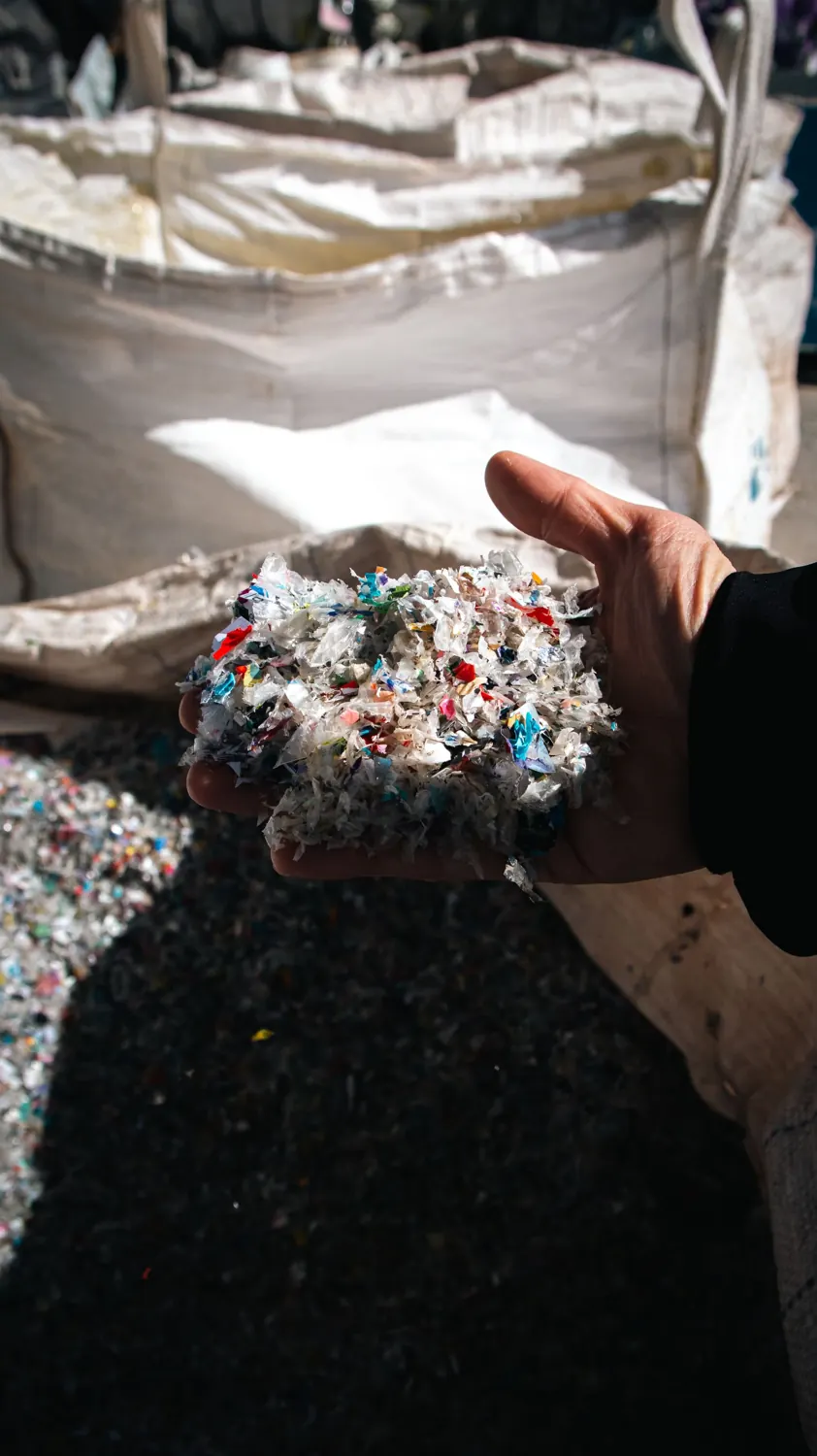
- Grinding and float separation: Bottles are turned into flakes. PET sinks because it is heavier than water, whereas PP and HDPE cap fragments float. This difference allows the cap and body to be separated from each other.
- Washing: Labels, adhesives and product residues are removed by hot washing.
- Extrusion and pelletising: The clean flakes are melted, filtered and turned into granules.
- Solid-state polymerisation (SSP): The intrinsic viscosity (I.V.) that drops during recycling is raised again in this step, making the material suitable for bottle and preform production.
Chemical recycling (breaking PET down into its monomers by methods such as glycolysis or methanolysis) is being developed as an option for waste that is difficult to process mechanically. However, these technologies are still at the stage of becoming widespread on an industrial scale.
rPET in food packaging
Using rPET in packaging intended for food contact requires more than reprocessing flakes that look clean. Some of the collected packaging may previously have been used for non-food purposes; possible contaminants must therefore be removed. The production of food-contact rPET uses decontamination processes operating at high temperature and under vacuum.
In the European Union, recycled plastics intended to come into contact with food are regulated by Regulation (EU) 2022/1616. Within this framework, recycling technologies and processes are assessed; packaging manufacturers using rPET are expected to track compliance documents throughout the supply chain. In Türkiye, food-contact plastics are regulated under the Turkish Food Codex; if recycled material is to be used, the relevant legislation and authorisation procedures must be assessed separately.
rPET also has technical aspects that require attention. The colour of the raw material can vary from batch to batch; the I.V. value and impurity level affect the blow moulding behaviour of the preform and the appearance of the end product. When the rPET rate is increased, sample production and laboratory checks should therefore be planned together.
What do the regulations bring?
In Europe, Directive (EU) 2019/904 on single-use plastics sets a recycled content target of at least 25% for PET beverage bottles from 2025 and at least 30% for all plastic beverage bottles from 2030. The same Directive has made it mandatory, from 3 July 2024, for caps on beverage containers of up to 3 litres to remain attached to the bottle during use. The Packaging and Packaging Waste Regulation (PPWR) introduces recycled content and recyclability targets for 2030 and 2040 according to packaging type. For exporting fillers, these targets are issues to be addressed early with the packaging supplier.
Designing packaging for recyclability
Whether packaging is recyclable depends not only on its material but also on its design. The design guidelines of organisations such as the European PET Bottle Platform (EPBP) and RecyClass highlight the following points:
- Colour: Clear and light-coloured PET produces more valuable secondary raw material than dark and opaque colours.
- Labels: Labels that cover the entire body and have the same density as PET can make optical sorting and float separation more difficult.
- Caps and seals: PP or HDPE caps, which are lighter than water, separate easily from PET in the float separation stage.
- Adhesives and additives: Adhesives that do not dissolve in washing and some barrier additives can reduce recycling quality.
Teknopet’s approach
Because of food safety requirements, Teknopet currently produces with 100% virgin PET raw material without regrind. We share our work on rPET use and recycling partnerships on the Sustainability page. We provide technical support in the choice of colour, cap and neck for the design of our products for recyclability.
The right choice in bottles and preforms
Explore our PET bottle and preform catalogue with its neck finish standard, weight and colour options.
Legislation and sources
- Regulation (EU) 2022/1616 – recycled plastic materials and articles intended to come into contact with food
- Directive (EU) 2019/904 – reduction of the impact of certain plastic products on the environment
- Packaging and Packaging Waste Regulation (PPWR)
- European PET Bottle Platform (EPBP) and RecyClass design guidelines